



How to Maximise Occupancy for Your North Wales Holiday Let
Empty weeks cost you more than you think. Every unbooked night in your holiday let isn’t just lost income — it’s a wasted opportunity that compounds across the year. An Anglesey cottage achieving 70% occupancy earns roughly £8,000-12,000 more per year than the same property at 55%. That gap is the difference between a holiday let that pays for itself and one that feels like a burden.
So how do you close that gap? The answer isn’t working harder. It’s working smarter across five key areas.
**Understanding North Wales Seasonality**
North Wales isn’t a single-season market, but too many owners treat it like one. They fill July and August, limp through September, and then leave October to April to chance.
The reality is more nuanced. Peak season (June-August) drives your highest nightly rates, but shoulder months (April-May and
September-October) are where profitable holiday lets in North Wales separate themselves from the rest. March sees the first wave of walkers and cyclists. Easter triggers family bookings. September brings couples and empty-nesters who’ve waited for the crowds to thin.
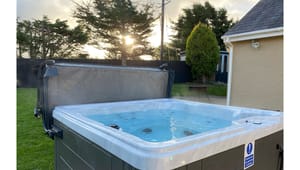
Then there’s the winter market — quieter, but not dead. Cosy cottages with wood-burning stoves and hot tubs attract weekend escapes, anniversary trips, and “get away from it all” bookings throughout January and February. Properties positioned for winter cosiness can maintain 40-50% occupancy even in the darkest months.
The key is understanding that every season has a different audience.
Summer is families. Shoulder months are couples, walkers, and active retirees. Winter is romantics and people who just need to escape. Your marketing — and your pricing — should reflect that.
**Dynamic Pricing vs Fixed Pricing**
This is where most self-managing owners leave serious money on the table.
Fixed pricing is simple: you set your rate in January and leave it there all year. Easy to manage, easy to understand — and almost always suboptimal.
Dynamic pricing adjusts your nightly rate based on demand, season, local events, and market conditions. High demand weeks (school holidays, bank holidays, local events like the Eisteddfod or Anglesey
Show) command premium rates. Low demand weeks can be priced attractively to fill gaps rather than sit empty.
The math is compelling. A property that charges £120/night year-round might earn £25,000 in a decent year. The same property with dynamic pricing — £180-220 in peak weeks, £90-110 in quieter periods — could earn £30,000-35,000. That’s not a marginal improvement. That’s a 20-40% revenue increase from the same property, just by pricing it correctly.
But here’s the catch: effective dynamic pricing requires market data, competitor analysis, and constant monitoring. Most owners don’t have the tools or the time. That’s one of the strongest arguments for professional management — the ability to maximise holiday let income in Wales through data-driven pricing decisions rather than guesswork.
**Listing Quality and Photography**
Your listing is your shop window. In an era where guests scroll through dozens of properties in minutes, first impressions aren’t important — they’re everything.
Professional photography is the single highest-ROI investment you can make. A property photographed well books more often, at higher rates, than the same property shot on a phone. Guests form an emotional connection before they ever read a word of your description.
But photography is just the start. Your listing description matters too. Generic descriptions like “cosy cottage with sea views” don’t sell. Specific descriptions do: “Wake up to views across the Menai Strait from your bedroom window. Walk five minutes to a Blue Flag beach. Return to a wood-burning stove and a hot tub under the stars.”
The other listing elements that matter: accurate amenity lists (guests filter by these), clear house rules, detailed location information, and availability calendars that are actually kept up to date. A stale calendar tells guests you’re not paying attention — and they’ll move on to a property that is.
**Guest Experience and Reviews**
Occupancy isn’t just about attracting new guests. It’s about getting existing guests to come back — and to bring friends.
A great guest experience starts before arrival. Clear booking confirmation, a welcome message with directions and check-in instructions, and a property that’s genuinely ready when they arrive.
Clean, stocked, warm, welcoming.
During the stay, it’s about responsiveness. When a guest asks how to work the hot tub, they want an answer now — not tomorrow. When the WiFi drops, they need it fixed quickly. Self-managing owners who have day jobs often can’t respond fast enough, and that’s when experiences sour.
After the stay, it’s about follow-up. A thank-you message, a gentle nudge to leave a review, and an invitation to return. Repeat guests cost nothing to acquire and are far more likely to leave positive reviews — which in turn drive more new bookings.
Reviews are the engine of occupancy. Properties with 4.8+ average ratings and 50+ reviews consistently outbook properties with fewer reviews, even at higher prices. Every five-star review is a marketing asset that keeps working long after the guest has gone home.
**Why Professional Management Outperforms Self-Managing**
Every section above points to the same conclusion: maximising occupancy requires expertise, tools, and time that most owners simply don’t have.
Professional holiday let management in Anglesey and across North Wales means having someone who monitors pricing daily, maintains listing quality across multiple platforms, responds to guests within minutes (not hours), coordinates cleaning and maintenance to a consistent standard, and actively markets your property to the right audience for every season.
The cost of professional management — typically 20-25% commission — is consistently offset by the revenue gains. Higher occupancy, better pricing, stronger reviews, and more repeat bookings. In most cases, owners earn more net income after management fees than they did self-managing, without lifting a finger.
You didn’t buy a holiday let to become a full-time property manager.
You bought it for the income and the asset. Professional management lets you enjoy both without the workload that makes self-managing feel like a second job.
—
**Ready to maximise your holiday let’s occupancy and income?** Coastal Holidays manages properties across Anglesey, the Llyn Peninsula, and Snowdonia — with data-driven pricing, professional photography, and guest service that drives five-star reviews. Learn more at https://coastalholidays.net/holiday-letting-with-coastal-holidays
What does your perfect coastal break look like?
We'll turn your answer into a personalised itinerary.
We'll reply the same business day. If you're after a full bespoke itinerary, expect that within 24 hours.